The Humble Administrator's Garden
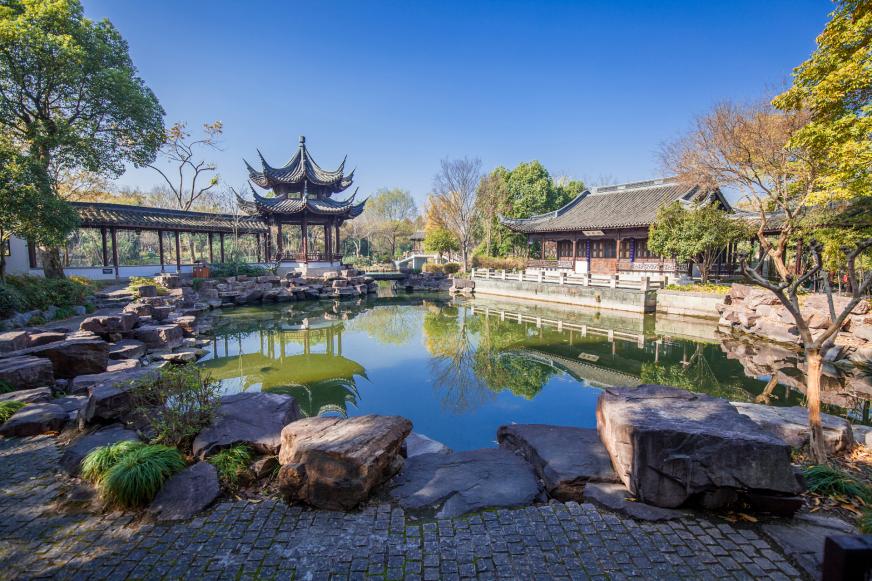
Located on Dongbei Street in Gusu District, Suzhou, the Humble Administrator's Garden ranks among China's Four Great Classical Gardens and represents the pinnacle of Jiangnan classical gardens. It was added to the World Heritage List in 1997.First built in 1509, the fourth year of the Zhengde reign of the Ming Dynasty, the garden was the creation of Wang Xianchen, an imperial censor who retired from official life and returned to his hometown. Its name originates from the line "A plain man tends to his garden instead of official duties" in Rhapsody on Leisure by Pan Yue of the Jin Dynasty, conveying the owner's longing for a quiet and reclusive life.Covering approximately 52,000 square meters, the garden consists of three sections: the east, the central and the west. The central area is its essence, where water areas take up one third of the space. Pavilions, terraces and towers line the waterside, showcasing the delicate charm of Jiangnan water towns. The eastern section features idyllic rural scenery, with well-spaced landmarks including the Lanyuan Hall and Zhuoyun Peak. The western section boasts exquisite architecture. The Hall of Thirty-Six Mandarin Ducks stands out with winding corridors and gorgeous decorations.Adopting a natural layout with well-proportioned spaces, the garden applies superb landscaping techniques such as borrowed scenery and framed scenery. A new view unfolds at every turn, fully embodying the gardening philosophy: "Though made by humans, it appears as if wrought by nature". Blending natural beauty, exquisite architecture and profound cultural charm, the Humble Administrator's Garden is an outstanding masterpiece of oriental garden art and a vivid carrier of Suzhou's millennium-old cultural heritage.
Lingering Garden
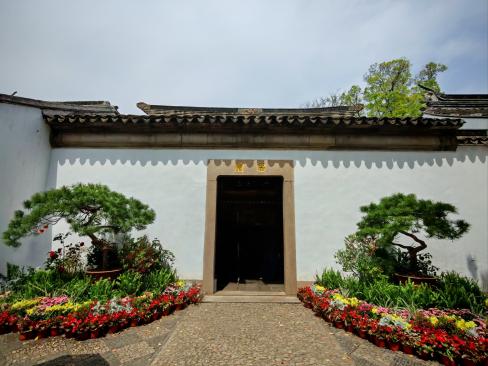
The Lingering Garden stands on Liuyuan Road in Gusu District, Suzhou. As one of China's Four Great Classical Gardens and a World Heritage Site, it is celebrated for its exquisite architectural spatial design and hailed as the finest garden in the Wu Region.First built in 1593, the 21st year of the Wanli reign of the Ming Dynasty, it was originally a private garden belonging to Xu Taishi, Vice Minister of the Court of Imperial Stud, and named the Eastern Garden. During the Jiaqing period of the Qing Dynasty, it was renamed the Cold Green Villa, commonly known as the Liu Garden. Later in the Guangxu reign, Sheng Kang renovated the garden and gave it the present name Lingering Garden, implying "lingering forever between heaven and earth". Covering an area of about 23,300 square meters, the garden is divided into four sections: central, eastern, western and northern, connected by a 700-metre winding corridor with an ingenious overall layout.The central section is the essence of the garden. Centered on a pond, the Hanbi Mountain House rises beside the water, surrounded by rockeries and towering ancient trees, presenting a serene landscape. The eastern section features dense buildings. The Five Peaks Immortal Hall, also called the Nanmu Hall, is spacious and magnificent. Standing here is the Cloud-Crowned Peak, a Taihu stone roughly 9 metres tall. A relic of the Flower and Stone Transport Fleet from the Northern Song Dynasty, it ranks among the finest Taihu stones in the Jiangnan area. The western section boasts rustic mountain charm, while the northern part takes on an idyllic countryside style adorned with elegant bonsai.Skilfully employing contrasts of size, curve and straight lines, light and shadow, the garden uses corridors, walls and lattice windows to divide yet link spaces. Scenery changes with every step. It integrates architecture, landscapes, plants and human culture, fully embodying the gardening philosophy: Though crafted by human hands, it looks as if naturally formed. The Lingering Garden is a model of Jiangnan gardens of the Qing Dynasty.
Tiger Hill Scenic Area
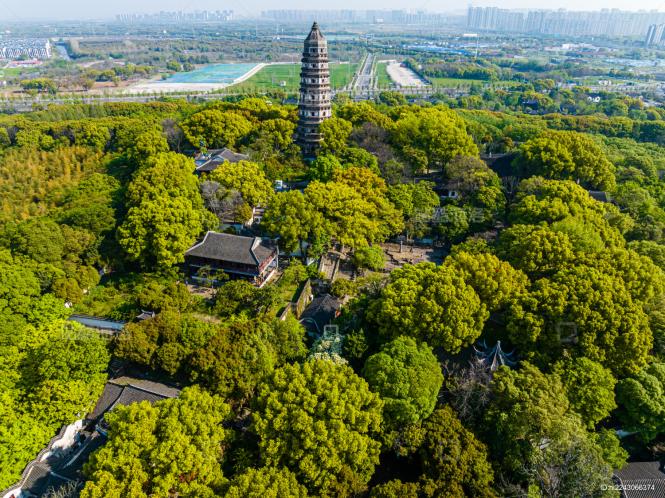
Located 3.5 kilometers northwest of the ancient city of Suzhou. Enjoying the reputations of "the No.1 scenic spot in the Wu Region" and "the finest landscape east of the Yangtze River", it boasts a history of more than 2,500 years. Su Dongpo, the great literary giant of the Song Dynasty, once remarked: "A visit to Suzhou without touring Tiger Hill is a real regret", which fully speaks to its eminent status.
Originally named Haiyong Hill, Tiger Hill got its current name from a legend. It is said that King Helü of Wu of the Spring and Autumn Period was buried here. Three days after his burial, a white tiger was seen crouching on the mound, hence the name "Tiger Hill". Formed by Jurassic volcanic magma, the hill stands merely 34.3 meters above sea level. Yet it integrates mountains, waters, pagodas, temples, springs and rock formations, winning the praise: "Though not lofty, the hill is exquisite; though not deep, the water is serene".
The iconic Yunyan Temple Pagoda (Tiger Hill Pagoda), the core attraction, was first built in the Five Dynasties. This seven-storey, eight-sided brick pagoda features an imitation timber-framed pavilion style, with a height of about 48 meters. Leaning toward the northwest, it is known as "China's Leaning Tower of Pisa" and has become a symbol of ancient Suzhou.
Sword Pond, the most mysterious spot on Tiger Hill, is a natural ravine around 20 meters long with water that never dries up all year round. On the cliff are the inscriptions of "Sword Pond" by Wang Xizhi and "Windswept Gorge and Cloud-kissed Spring" from the Yuan Dynasty. Legend has it that this was where King Helü hid his treasured swords.
In addition, numerous historical relics such as the Beamless Hall, Thousand-Person Rock and Hanhan Spring scatter across the area, preserving the timeless legends of the Wu and Yue Kingdoms during the Spring and Autumn Period.
Master of the Nets Garden
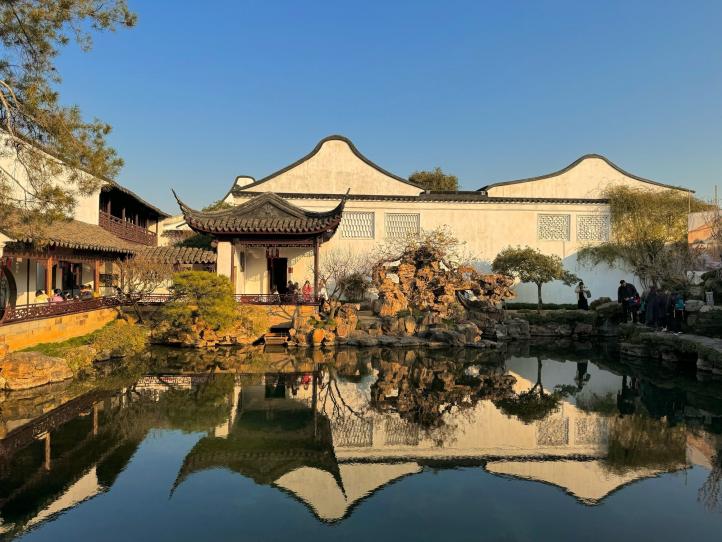
Located at Kuojiatou Lane, Daichengqiao Road, Gusu District, Suzhou, the Master of the Nets Garden is a World Cultural Heritage Site and a Major Historical and Cultural Site Protected at the National Level. Hailed as the pinnacle of Suzhou's miniature gardens, it is celebrated for its gardening art of creating grand vistas within a compact space.First built during the Chunxi reign of the Southern Song Dynasty (1174–1189), it originally served as the Ten Thousand Scrolls Hall belonging to Shi Zhengzhi, a vice minister. Its garden was named Fisherman's Retreat, embodying the owner's longing for a reclusive life. In the Qianlong reign of the Qing Dynasty, Song Zongyuan, a senior official of the Court of Imperial Entertainments, reconstructed the garden and renamed it the Master of the Nets Garden. "Master of the Nets" refers to a fisherman, carrying forward the aspiration of seclusion.Covering an area of merely about 8 mu, the garden is less than one-sixth the size of the Humble Administrator's Garden. Yet its exquisite layout never feels cramped. It follows the classic pattern of residence in the east and garden in the west. The eastern part consists of living quarters, while the western section is the scenic garden.Centered on Caixia Pond in the middle, the clear water spans half a mu. Pavilions and terraces scattered around the pond form the soul of the entire garden. The Moon and Breeze Pavilion stands with three sides facing the water, an ideal spot for moon-gazing. Yinqing Bridge, only 2.4 meters long, is the smallest stone arch bridge in Suzhou, delicate and dainty.To the south stand waterside buildings including the Hill Among Cassia Blossoms Veranda and the Washing Ribbon Waterside Pavilion. The northern area features quiet study spaces such as the Five Peaks Library and the Void Collection Studio.The Peony Study, a classic courtyard study within the garden, served as the prototype for the Astor Court constructed at The Metropolitan Museum of Art in New York, USA, in 1980. It has become an iconic symbol of Chinese gardens going global.Blending residence and garden harmoniously with a clear hierarchy and varied spaces, the Master of the Nets Garden perfectly interprets the ancient gardening philosophy: "Though made by human hands, it looks as if crafted by nature". It stands as the supreme masterpiece of small-scale gardens in the regions south of the Yangtze River.
Pingjiang Historic District
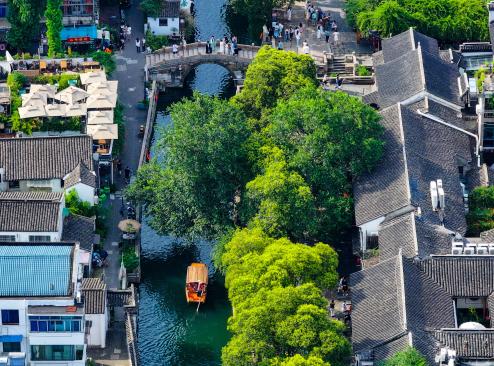
Located in the northeastern part of Suzhou Ancient City, Pingjiang Historic District is among the first batch of China's Top Ten Famous Historical and Cultural Streets and hailed as a miniature of ancient Suzhou.With a history of over 2,500 years, it adopted the unique double chessboard layout of parallel waterways and land roads, rivers alongside streets as early as 514 BC, when Wu Zixu built the grand Helü City. The core Pingjiang Road stretches about 1.6 kilometers along the river, crisscrossed by lanes on both sides. Its overall layout remains highly consistent with the stone stele Pingjiang Map of the Southern Song Dynasty, earning it the reputation as a living fossil of ancient Chinese urban planning.
Scattered across the district are 17 ancient bridges, 46 protected historic buildings and 21 brick-carved gate towers, presenting the classic scenery of small bridges, flowing streams, whitewashed walls and black tiles. It is also home to cultural relics including the Couple's Retreat Garden, a World Cultural Heritage site, and the Shanxi Guild Hall. Intangible cultural heritages such as Kunqu Opera, Suzhou Pingtan and Suzhou Embroidery are well preserved and passed down here.The district seamlessly blends ancient charm and everyday vitality. Melodious pipa music drifts out of old teahouses; cultural and creative stores stand side by side with traditional workshops. Visitors stroll along flagstone paths while boats glide gently on the water. In 2005, it won the UNESCO Asia-Pacific Heritage Awards for Culture Heritage Conservation, setting a fine example for the dynamic preservation of ancient cities.
Carrying Suzhou's millennial cultural heritage, Pingjiang Historic District is an unmissable destination to experience the culture of water towns in the Jiangnan region.
Hanshan Temple
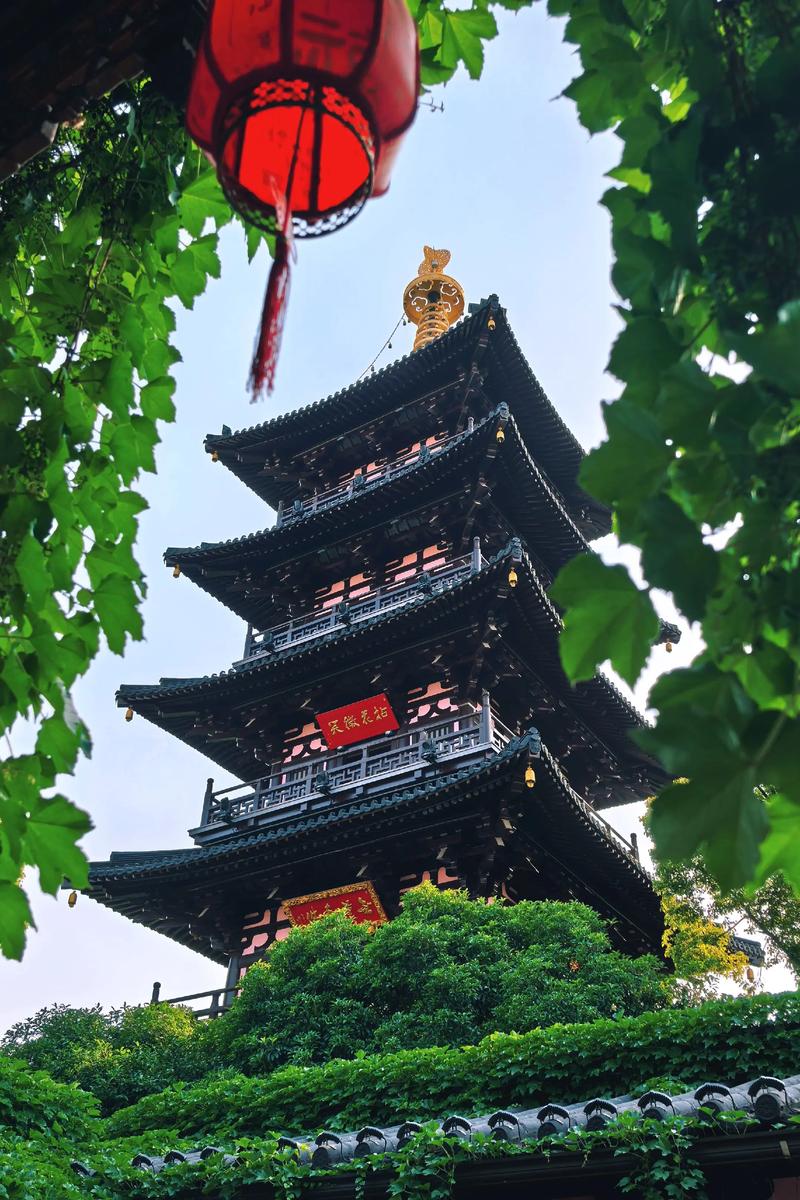
Situated on the eastern bank of the Grand Canal in Fengqiao Ancient Town, Gusu District, Suzhou, Hanshan Temple ranks among China's Top Ten Famous Temples and is a national AAAA-level scenic spot. As an integral part of the Grand Canal World Cultural Heritage, it gained worldwide fame thanks to Mooring by Maple Bridge at Night, a classic poem by Zhang Ji of the Tang Dynasty.First constructed during the Tianjian reign of the Liang Dynasty in the Southern Dynasties (502–519), the temple was originally named Miaoli Puming Pagoda Courtyard, with a history of over 1,500 years. In the Zhenguan period of the Tang Dynasty, eminent monks Hanshan and Shide resided here. The temple was later renamed Hanshan Temple, and the two monks were revered as the Two Immortals of Harmony and Union. Having endured repeated destruction and reconstruction over the centuries, most of the existing buildings date back to the Guangxu reign of the Qing Dynasty.The temple is celebrated for its poetic charm, resonant bell chimes and serene Buddhist ethos. The five-storey Puming Pagoda, built in the architectural style of the Tang Dynasty, stands as a local landmark. From its top, visitors can enjoy a panoramic view of the Grand Canal and Maple Bridge. The Mahavira Hall houses the statue of Sakyamuni, flanked by stone carvings of Hanshan and Shide. The Stele Corridor collects inscriptions by celebrated scholars through the ages, among which the stele of Mooring by Maple Bridge at Night written by Yu Yue is a true treasure of calligraphy.Hanging in the Bell Tower is a two-ton iron bell cast in the Guangxu reign of the Qing Dynasty. Its sonorous tolls make the famous "midnight bell chimes" renowned far and wide. Every New Year's Eve, a bell-ringing ceremony is held here. The 108 tolls bid farewell to the old year and welcome the new, carrying forward the age-old Buddhist spirit and poetic allure. Blending Buddhism, classical poetry, the culture of harmony and the Grand Canal heritage, Hanshan Temple shines as a splendid cultural symbol of the Jiangnan region.